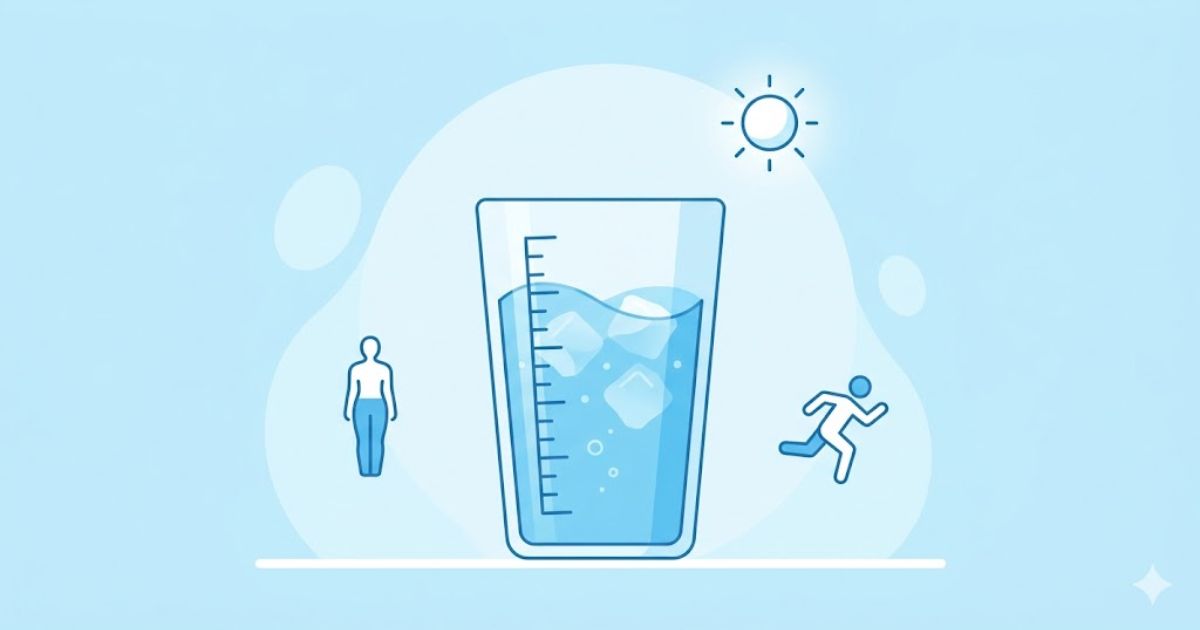
Eight glasses a day. You've heard it since childhood. It's printed on water bottles, repeated by doctors, and posted on every wellness Instagram account you've ever seen. There's just one problem — nobody seems to know where that number actually came from. And the answer might surprise you.
The "8 Glasses" Myth — Where Did It Start?
The eight-glasses rule traces back to a 1945 U.S. government nutrition recommendation that suggested adults consume about 2.5 litres of water per day. Sounds reasonable. But the very next sentence — the one everyone ignored — said that most of this water would come from food. Fruits, vegetables, soups, and even coffee all contribute to your daily fluid intake.
Somewhere between 1945 and your morning routine, that nuance got completely lost. The "8 glasses of pure water" rule stuck around anyway — not because of science, but because it's a simple, memorable number. Simple and memorable doesn't always mean accurate.
So How Much Do You Actually Need?
The honest answer: it depends. Your body is not the same as anyone else's body, and your water needs aren't either. The most trusted current guidelines from the U.S. National Academies suggest:
- Men: Around 3.7 litres (125 oz) of total fluid per day — from all sources
- Women: Around 2.7 litres (91 oz) of total fluid per day — from all sources
Notice "total fluid" and "all sources." Your food accounts for roughly 20% of that — which means drinking around 2–3 litres of water throughout the day covers most people well. But this is still a general average, not a prescription for you specifically.
Five Things That Change Your Water Needs Completely
1. Your body weight. Larger bodies need more water. A 100 kg person has significantly higher fluid needs than a 55 kg person. Some nutritionists use a simple baseline of 35ml per kg of body weight as a starting estimate.
2. How active you are. Exercise is the biggest variable. Even a moderate 45-minute workout can cause you to lose 500ml–1 litre of water through sweat. In hot conditions or high-intensity training, losses can be two to three times higher. Hydration before, during, and after exercise is non-negotiable.
3. Where you live. Heat and humidity dramatically increase sweat loss. Someone living in a hot, dry climate — or working outdoors in summer — can need 1–2 litres more per day than someone in a cool, air-conditioned environment. If you're in Pakistan, especially during summer months, your needs are significantly higher than Western guidelines suggest.
4. Whether you're pregnant or breastfeeding. Pregnant women need around 300ml more per day. Breastfeeding increases needs by up to 700ml extra daily — because water is a key component of breast milk.
5. Your health. Fever, vomiting, and diarrhoea cause rapid fluid loss. Kidney stones, urinary tract infections, and certain medications also affect how much water your body needs and retains.
The Simplest Way to Know If You're Drinking Enough
Forget counting glasses. Look at your urine. It's not glamorous advice, but it's genuinely the most reliable real-time hydration indicator available to you without any equipment.
- Pale yellow — You're well hydrated. This is the target.
- Clear — You may actually be over-hydrated. Yes, that's a thing.
- Dark yellow or amber — You're dehydrated. Drink water now.
- Orange or brown — Severely dehydrated or a medical issue. See a doctor.
Your body gives you this feedback all day, for free. Use it.
Can You Drink Too Much Water?
Yes — and it's more dangerous than most people realise. Drinking excessive water in a short period dilutes the sodium in your blood, causing a condition called hyponatremia. Symptoms include nausea, headaches, confusion, and in severe cases, seizures. This most commonly happens to endurance athletes who drink large amounts of plain water during long events without replacing electrolytes.
For the average person, over-hydration is rare — but it's worth knowing that more water is not always better. Balance matters.
Does Coffee Count? What About Tea?
Yes. Despite the old myth that caffeine is dehydrating, research shows that moderate coffee and tea consumption contributes positively to your daily fluid intake. The mild diuretic effect of caffeine is offset by the large volume of liquid in the drink itself. So your morning coffee counts — just don't use it as your only source of hydration.
Find Your Personal Water Target
General guidelines are a starting point. Your water intake should be personalised to your weight, activity level, and climate. Our free Water Intake Calculator takes all of these into account and gives you a specific daily target in both litres and glasses — so you know exactly how much your body needs, not just what works for an average person.